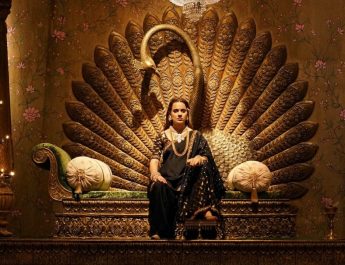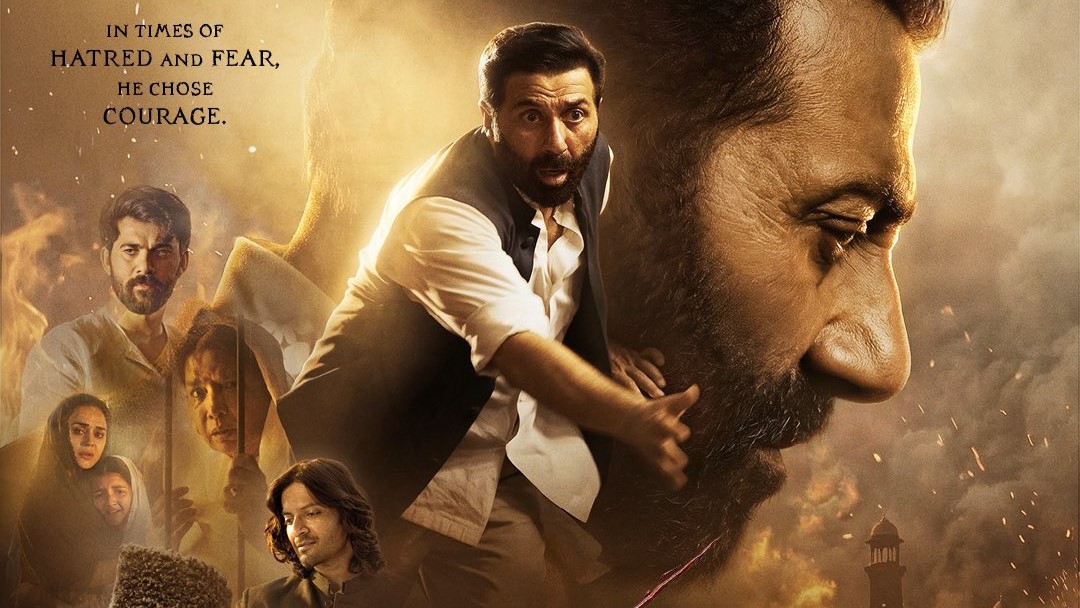
Batwara 1947 is a period drama film co-written and directed by Rajkumar Santoshi, and produced by Aamir Khan under the banner of Aamir Khan Productions. The film is based on Asghar Wajahat’s play Jis Lahore Nai Vekhya, O Jamya E Nai. This is expected to be Zinta’s comeback film after an eight-year hiatus. For Santoshi, this is a grand return to form, a full 22 years after his Khakee.
Star Cast:
Sunny Deol as Sikander Mirza
Preity Zinta as Hamida Mirza
Shabana Azmi as Durgavati / Mai
Karan Deol as Javed Mirza
Khushi Hajare as Tanvir Mirza
Ali Fazal as Habib Anwar
Abhimanyu Singh as Yaqoob Shuja
Kanikka Kapur as Nishaat
Isha Sandhir as Tabassum
Khalid Siddiqui as Ratan
MOVIE REVIEW: Batwara 1947 is adapted from Asghar Wajahat’s acclaimed play Jis Lahore Nai Vekhya, O Jamya E Nai, a story that has long been regarded for its powerful message of humanity, communal harmony and compassion. The film succeeds in delivering several heartfelt moments, but it doesn’t always translate its emotional potential for mass-oriented big-screen moments that one expects from a Sunny Deol–Rajkumar Santoshi collaboration.
The story remains the biggest strength of the film. The narrative uses the backdrop of Partition to explore humanity beyond religious identities. The screenplay is powered by strong drama and emotional situations, with several scenes that genuinely touch the heart. However, the combination of Sunny Deol and Rajkumar Santoshi, one naturally expects a few explosive, whistle-worthy moments, but Batwara 1947 largely chooses a simpler and more grounded approach.
The dialogues are sharp and impactful in most places and effectively underline the film’s central message. However, they don’t quite reach the level of the searing, unforgettable one-liners that have been a trademark of many of Sunny Deol and Rajkumar Santoshi’s earlier collaborations. The duo previously delivered films such as Ghayal (1990), Damini (1993) and Ghatak (1996), where action and dialogues became an integral part of the cinematic experience.
Director Rajkumar Santoshi handles the religious sentiments with considerable sensitivity. However, the film does have its share of shortcomings. The runtime is another issue, particularly in the middle portion of the second half, where the film begins to drag. The pacing could certainly have been tighter. The film regains momentum towards the end, and the climax is quite moving, delivering the emotional payoff the story deserves. A. R. Rahman’s music is underwhelming. Among the songs, Kahaan Chale Gaye Ho Ram, with voice of Anuradha Paudwal and lyrics by Javed Akhtar, stands out as the only song that leaves an impression.
Coming to the performances, Sunny Deol delivers a good performance, particularly in the emotional scenes. However, the film belongs to Shabana Azmi and her portrayal of Mai. She is so natural, warm and endearing in the role that audiences connect with her almost instantly. Preity G Zinta brings sincerity and grace to her character and fits comfortably into the emotional world of the film. Ali Fazal is too good in a supporting role. Abhimanyu Singh is aptly cast as the villain and makes his presence felt. Karan Deol struggles to make a strong impact. He is neither particularly convincing in the action portions nor does he bring enough emotional weight to the dramatic scenes. Khushi Hajare and Kanikka Kapur are decent in their respective roles.
Overall, Batwara 1947 is a well-intentioned and emotionally engaging film that works primarily because of its story, performances and powerful message of humanity. The film could have been considerably more impactful with tighter editing, stronger music, more memorable dialogues and a few genuinely powerful mass moments. Batwara 1947 has enough heart to make for a good one time watch.
Batwara 1947 Movie Rating:
Direction 2.5/5
Acting 3/5
Music 2/5
Story 3/5
Editing 2/5
Overall Hit ya Flop Rating: 2.5 out of 5 Stars (Average)